
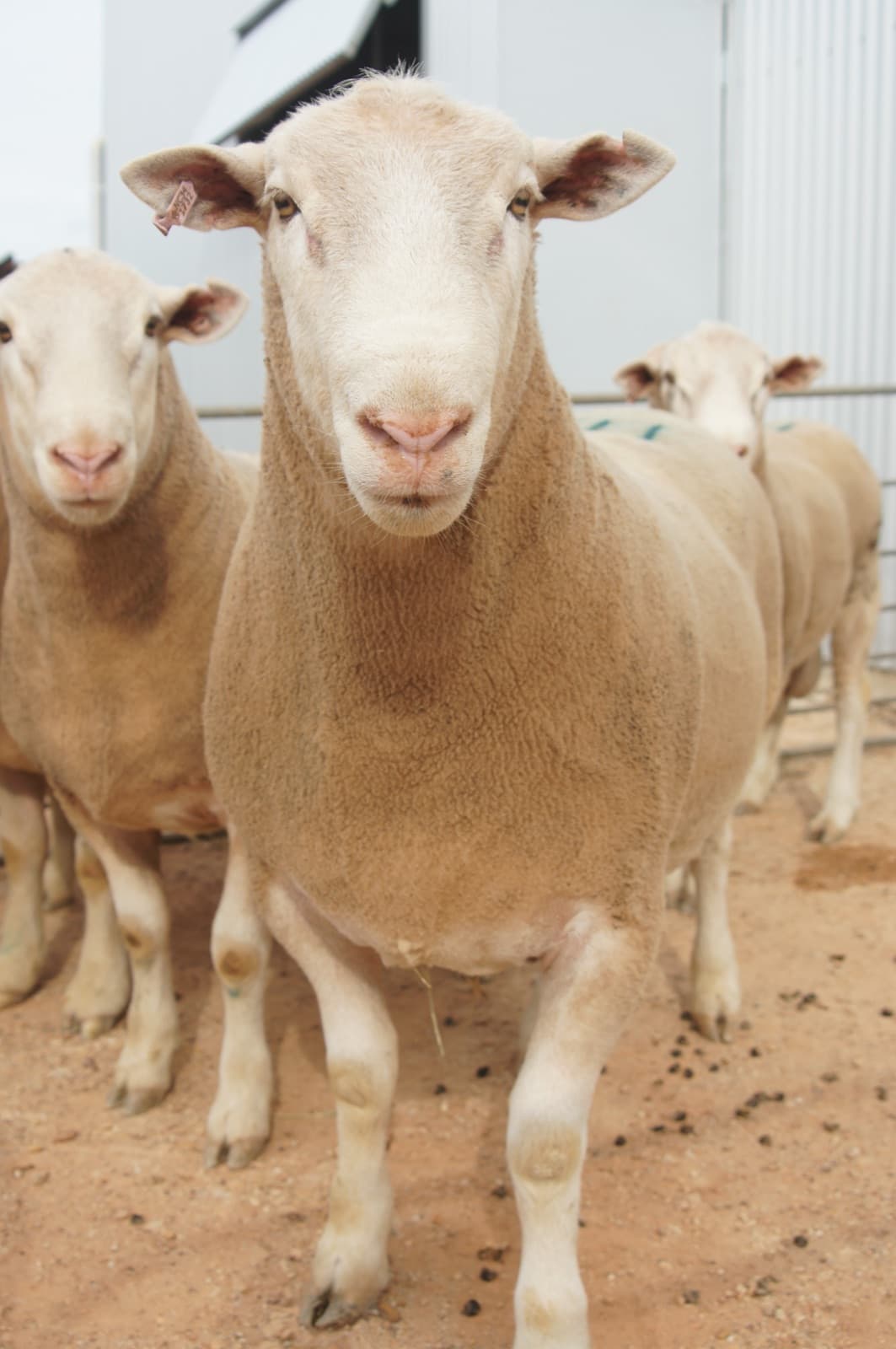
Growth
Post-weaning weight pushed hard — lambs hit market weight sooner, off a low birth weight.
The terminal that completes the system.
Lambs that grow fast, finish quick and eat well — off a low birth weight, so ewes lamb unassisted.
Four things a Trigger Vale sire pays out in the carcass — each bred to a number, not left to chance.
Post-weaning weight pushed hard — lambs hit market weight sooner, off a low birth weight.
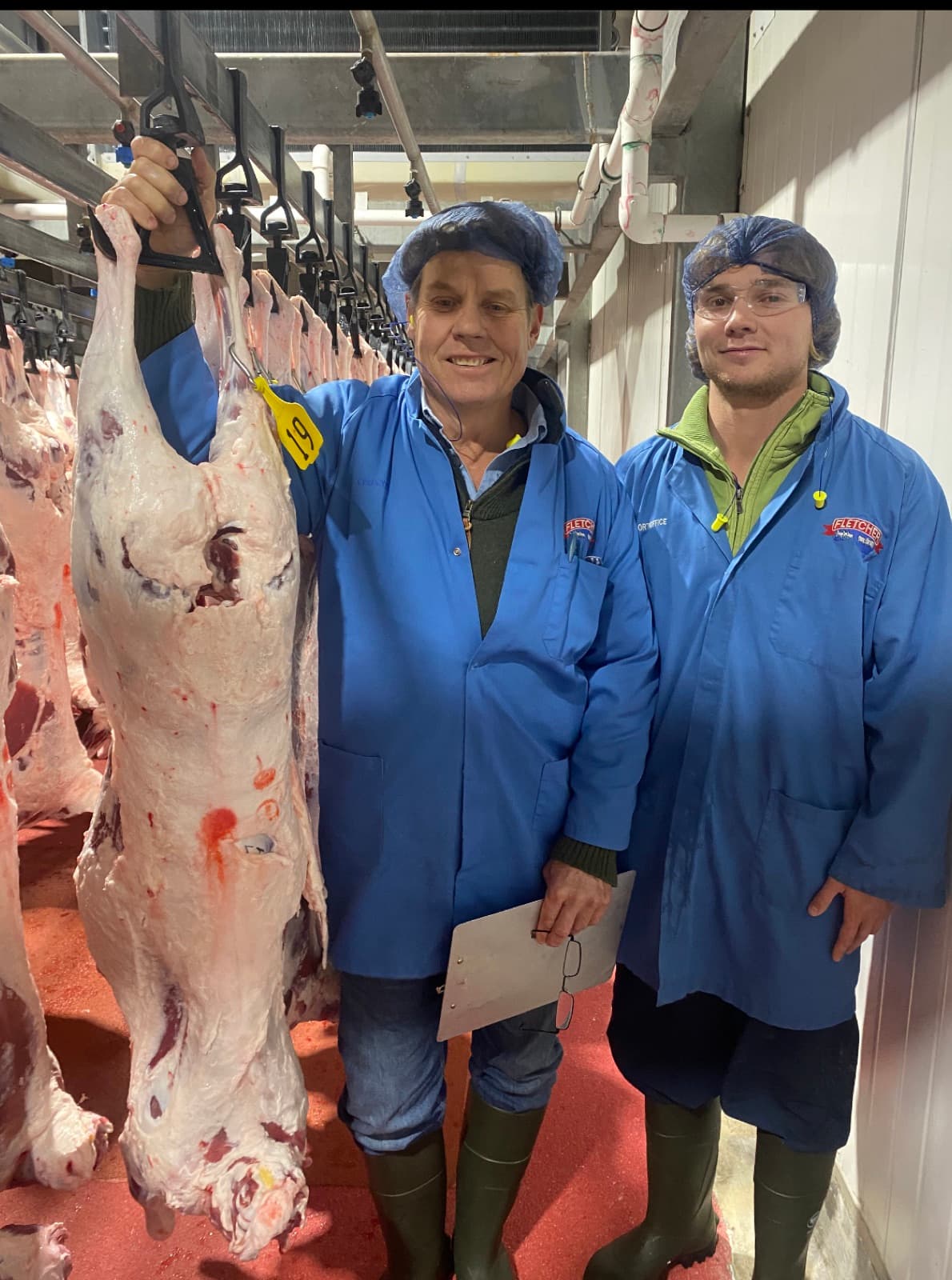
More eye muscle at the C-site — carcass shape and yield that grades, not gets discounted.

More lean meat and better dressing — saleable weight off the same live weight.
Marbling above the breed, shear force below it — tenderness bred in, not left to chance.
Who it works for
| Type | What they do | What they're chasing | What we breed for it |
|---|---|---|---|
| Merino producer | Terminal over surplus and older Merino ewes. Keeps his own maternal replacements. | Easy lambing. Extra value off the ewes he isn't breeding from. | Low birth weight, high lambing ease — then big early growth and carcass shape. |
| Prime lamb producer | Maternal or composite ewe base, terminal over the top, every lamb to slaughter. | Fast turn-off. Maximum carcass value per ewe joined. | Post-weaning growth, eye muscle, lean yield and eating quality. |
| Finisher | Buys terminal-sired store or feeder lambs to finish. | Fast, even finishing. Lambs that turn off quick on weight and grade. | Growth and muscle that convert feed to saleable carcass. |
The same sire suits all three — the difference is where you sell. Take the lamb to slaughter, or turn it off as a store, and the growth is already in it.
A Trigger Vale terminal is built for the carcass — long, deep, and heavily muscled through the loin and hindquarter. But the non-negotiable is that it lambs easily — and lambing ease is a number we breed to, not a look we guess at. Structure first, then the data does the rest.
Each goes deeper on its own page.
How we select
The eye — the gate
Muscle, structure and feet come first — the visual soundness that decides whether a sheep can walk, work and hold up in the paddock. Fail there, and no number saves it.
The data — the leverage
Pass, and the data does the heavy lifting: growth, carcass, low birth weight and lambing ease off a full LAMBPLAN profile, 5-star quality — every call from there.
push post-weaning weight hard — the age growth is worth the most on a terminal drop — for fast, early finishing to an export carcass.
hold birth weight well below the terminal average, so big growth never comes at the cost of a hard lambing.
more eye muscle, more lean meat and better dressing — carcass value bred to the same standard as everything we breed.
marbling above the breed and shear force below it, so the loin stays tender as growth and yield lift.
lambing ease selected up alongside a moderate birth weight — more lambs on the ground unassisted, less labour when it counts most.
feet, frame and soundness first — a sire that holds up in a commercial paddock, not just under trial feeding.
Measured, then selected
Where we sit today, and where we're driving each trait.
The full objective
| Open in data | ||||||||||
|---|---|---|---|---|---|---|---|---|---|---|
| Growth | Birth Weight | Within 24 hrs | BWT | 0.3 kg | 0.3 kg | Top 50% | High | Reduce | High | |
| Weaning Weight | ~100 days | WWT | 9.8 kg | 11.3 kg | Top 30% | Med | Improve | High | ||
| Post Weaning Weight | ~225 days | PWT | 15.2 kg | 18.0 kg | Top 30% | High | Improve | High | ||
| Carcass | Post Weaning Eye Muscle Depth | ~225 days | PEMD | 2.4 mm | 3.2 mm | Top 30% | High | Improve | High | |
| Post Weaning Fat Depth | ~225 days | PFAT | -0.1 mm | 0.4 mm | Top 30% | Med | Maintain | Low | ||
| Carcase Eye Muscle Depth | Carcase | CEMD | 2.3 mm | 2.6 mm | Top 40% | |||||
| Carcase Fat | Carcase | CCFAT | -0.8 mm | -0.6 mm | Top 40% | |||||
| Lean Meat Yield | Carcase | LMY | 3.2% | 3.5% | Top 50% | Med | Improve | Low | ||
| Dressing Percentage | Carcase | DRESS | 2.5% | 3.1% | Top 30% | |||||
| Intramuscular Fat | Eating quality | IMF | -0.35% | -0.04% | Top 20% | High | Improve | High | ||
| Shear Force | Eating quality | SHEARF5 | 1.74 N | 0.34 N | Top 30% | Med | Improve | High | ||
| Reproduction | Lambing Ease | Birth | LE | 0.7% | 2.1% | Top 20% | High | Improve | Med |